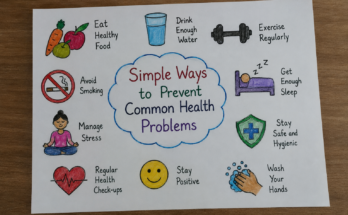
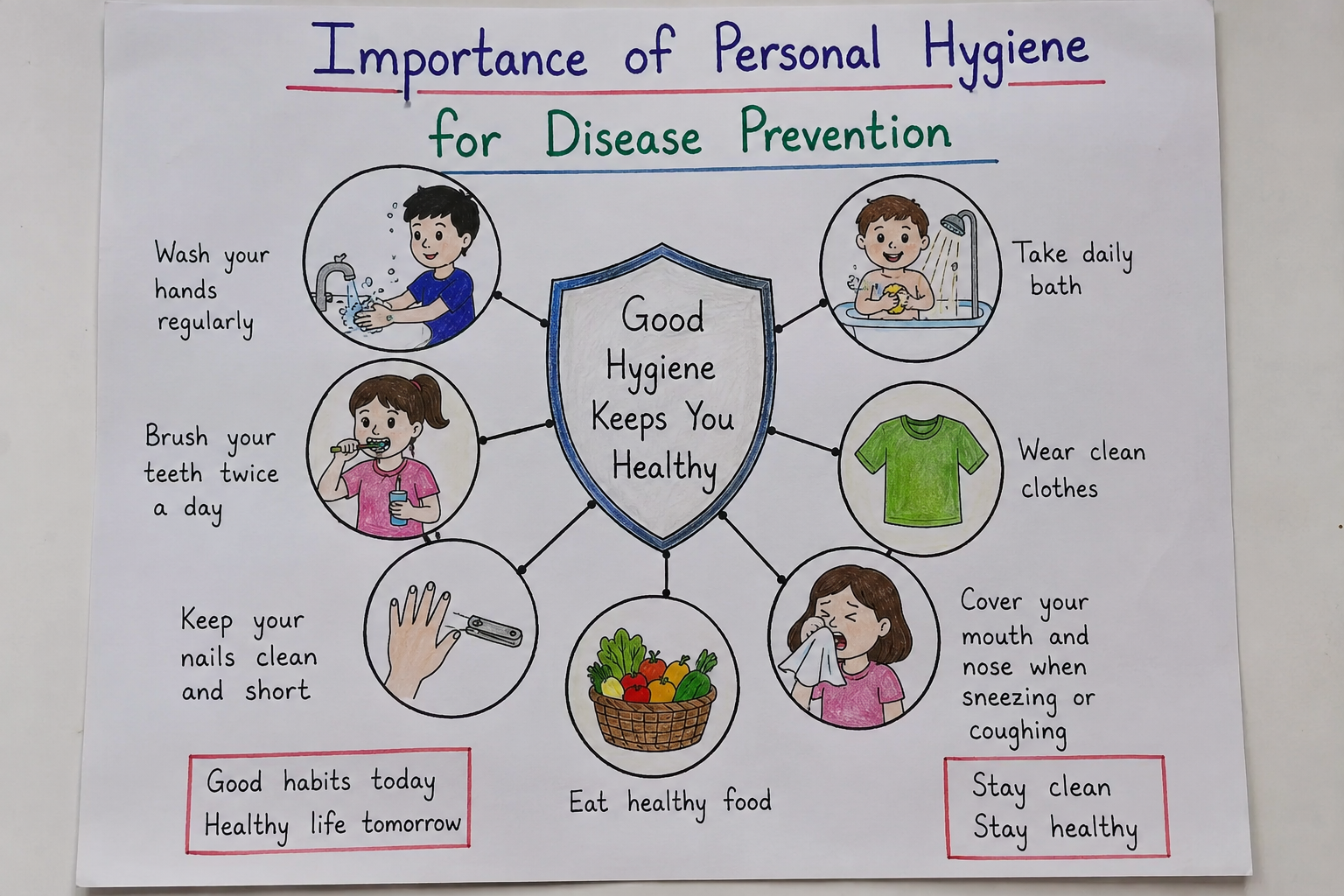
Personal hygiene is one of the most important parts of maintaining good health and preventing diseases. It includes simple daily habits such as washing hands, bathing regularly, brushing teeth, wearing clean clothes, keeping nails clean, and maintaining a clean living environment. These habits may seem simple, but they play a major role in protecting the body from harmful germs, bacteria, viruses, and other sources of infection.
Good personal hygiene is important for people of every age. Children, teenagers, adults, and older people can all benefit from healthy hygiene habits. By following proper personal hygiene practices every day, people can reduce the spread of many common illnesses and improve their overall health and well being.
What Is Personal Hygiene?
Personal hygiene refers to the daily practices people follow to keep their bodies clean and healthy. These practices help remove dirt, sweat, germs, and other unwanted substances from the skin, hair, mouth, hands, and other parts of the body.
Personal hygiene is not only about looking clean. It is also about protecting health. Germs can easily spread through hands, shared objects, food, water, surfaces, and close contact with other people. Proper hygiene helps reduce the chances of these germs entering the body and causing illness.
Developing good hygiene habits from an early age can make healthy living easier throughout life. Simple actions performed consistently can make a significant difference in disease prevention.
Hand Washing Helps Prevent Infections
Hand washing is one of the easiest and most effective ways to prevent the spread of diseases. People touch many surfaces throughout the day, including door handles, phones, tables, keyboards, money, and public transportation equipment. These surfaces may contain germs that can transfer to the hands.
Washing hands properly with soap and clean water can remove many harmful germs. Hands should be washed before eating or preparing food, after using the toilet, after coughing or sneezing, after touching animals, and after returning home from public places.
Proper hand washing should include wetting the hands, applying soap, rubbing all parts of the hands for about twenty seconds, rinsing with clean water, and drying them with a clean towel or air dryer. When soap and water are not available, an appropriate alcohol based hand sanitizer can be useful.
Regular Bathing Keeps the Skin Healthy
Regular bathing is another important part of personal hygiene. During the day, sweat, dust, oil, and microorganisms can build up on the skin. Regular bathing helps remove these substances and keeps the skin fresh and clean.
Keeping the body clean can also reduce unpleasant body odor and lower the risk of certain skin problems. Areas such as the armpits, feet, and other skin folds can become warm and moist, creating conditions where some microorganisms can grow.
A regular bathing routine should be combined with clean towels and clean clothing. People who exercise frequently or work in hot environments may need to bathe more often because of increased sweating.
Oral Hygiene Protects Teeth and Gums
Oral hygiene is an essential part of personal hygiene and disease prevention. Poor oral hygiene can allow bacteria and plaque to build up around the teeth and gums. Over time, this can contribute to tooth decay, bad breath, gum problems, and other oral health concerns.
Brushing the teeth twice a day with fluoride toothpaste is a basic oral hygiene habit. Cleaning between the teeth can also help remove food particles and plaque from areas that a toothbrush may not reach easily.
Regular dental checkups are also important because dental professionals can identify problems early and provide appropriate advice. A healthy mouth supports overall health and can make eating, speaking, and daily activities more comfortable.
Clean Clothes and Personal Items Matter
Wearing clean clothes is another simple way to maintain personal hygiene. Clothes can collect sweat, dirt, dead skin cells, and microorganisms during daily activities. Changing clothes regularly and washing them properly helps keep the body clean.
Underwear, socks, and clothing worn during exercise may need frequent changing because they can absorb sweat. Towels, bed sheets, and other personal fabrics should also be cleaned regularly.
Personal items such as toothbrushes, razors, towels, and combs should generally not be shared. Sharing these items can increase the risk of spreading certain infections.
Nail Hygiene Can Reduce Germs
Nails can collect dirt and microorganisms, especially when they are long or not cleaned regularly. People often touch their faces, food, and other objects without realizing it. Dirty nails can therefore become a way for germs to enter the body.
Keeping fingernails trimmed and clean is an easy personal hygiene habit. Hands and nails should be washed carefully, especially after using the bathroom, working with soil, handling waste, or playing outside.
Children should be encouraged to keep their nails clean because they frequently touch surfaces and objects while playing.
Good Hygiene Helps Prevent Foodborne Illness
Personal hygiene is especially important when preparing and eating food. Dirty hands can transfer harmful microorganisms to food, which may lead to foodborne illness.
Hands should always be washed before preparing meals and before eating. Fresh fruits and vegetables should be washed properly, and kitchen surfaces should be kept clean. Raw foods should be handled carefully to avoid spreading microorganisms to ready to eat foods.
People who prepare food should also avoid preparing meals for others when they have symptoms of certain infectious illnesses. Good hygiene in the kitchen protects not only one person but also the entire household.
Personal Hygiene Reduces the Spread of Common Diseases
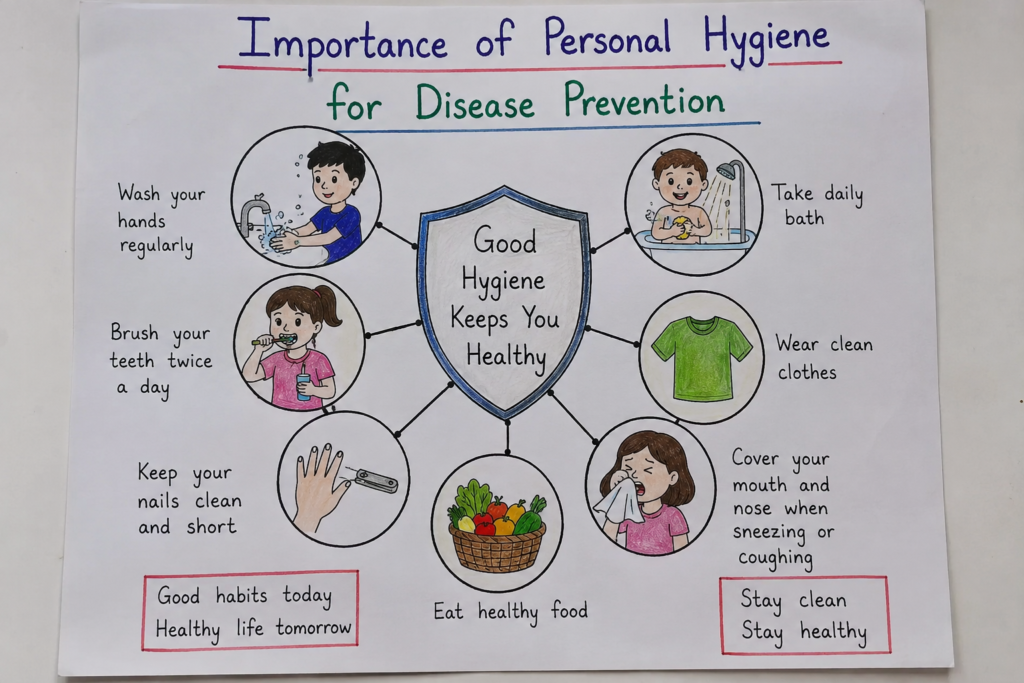
Many common illnesses can spread through contact with contaminated hands, surfaces, droplets, or personal items. Good hygiene can reduce the chances of spreading infections within homes, schools, offices, and public places.
Covering the mouth and nose when coughing or sneezing is an important hygiene practice. Using a tissue or coughing into the elbow can help reduce the spread of respiratory droplets. Used tissues should be disposed of properly, followed by hand washing.
Avoiding unnecessary touching of the eyes, nose, and mouth can also reduce the opportunity for germs on the hands to enter the body.
Hygiene Is Important in Schools and Workplaces
Schools and workplaces bring many people together in shared environments. Because people frequently touch the same surfaces, germs can spread easily when hygiene practices are poor.
Students and workers should be encouraged to wash their hands regularly and keep personal spaces clean. Frequently touched surfaces should also be cleaned appropriately.
Teaching children about personal hygiene can have long term benefits. When children understand why hygiene matters, they are more likely to develop habits that continue into adulthood.
Personal Hygiene Supports Confidence and Well Being
Personal hygiene does more than prevent disease. It can also improve confidence and social comfort. Feeling clean and fresh can help people feel more comfortable when interacting with friends, family members, classmates, and coworkers.
Good hygiene can also support emotional well being by creating a sense of cleanliness and routine. Simple habits such as taking a shower, brushing the teeth, changing clothes, and washing the face can become positive parts of a daily routine.
How to Build Better Hygiene Habits
Building good personal hygiene habits does not need to be difficult. The key is consistency. People can begin with a simple daily routine that includes brushing the teeth in the morning and before bed, bathing regularly, washing hands at important times, wearing clean clothes, trimming nails, and keeping personal belongings clean.
Parents can teach children by demonstrating these habits themselves. Schools can also provide age appropriate hygiene education. When hygiene becomes part of everyday life, it requires less effort and becomes a natural routine.
It is also important to understand that hygiene needs can vary from person to person. Weather, physical activity, age, occupation, and lifestyle can influence how often certain hygiene practices are needed.
Conclusion
The importance of personal hygiene for disease prevention should never be underestimated. Simple habits such as hand washing, regular bathing, oral care, clean clothing, nail care, and safe food handling can help protect people from many common infections and health problems.
Personal hygiene is not only about appearance. It is an important part of healthy living and community health. When individuals practice good hygiene consistently, they can reduce the spread of harmful germs and create cleaner environments for everyone.
Making personal hygiene a daily priority is one of the simplest steps people can take toward better health. Small habits performed every day can provide lasting benefits and help people live healthier, cleaner, and more confident lives.