
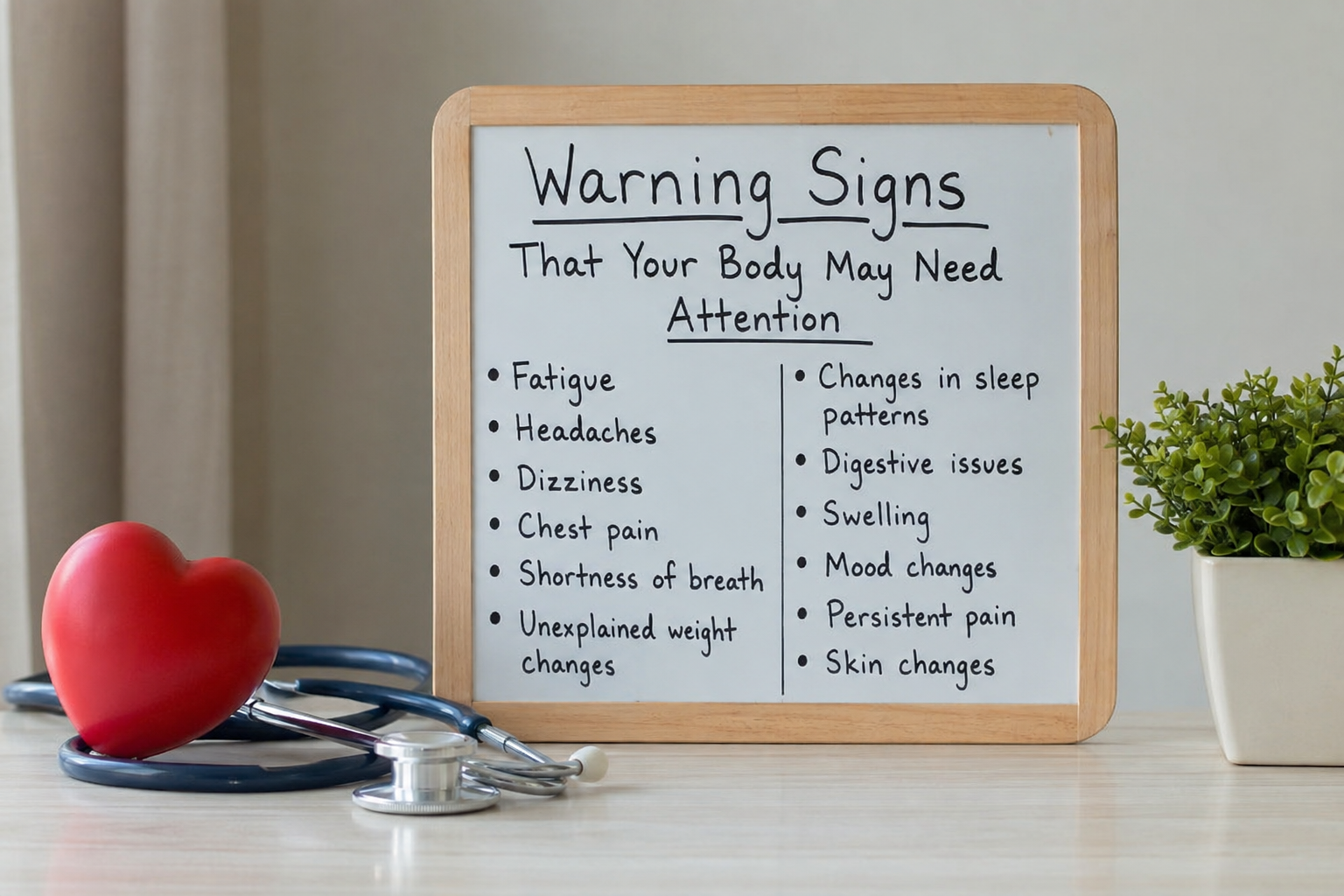
Your body is always communicating with you. Sometimes these signals are easy to notice, such as feeling tired after a busy day or becoming thirsty after exercise. Other times, changes in your body may continue for days or weeks and should not be ignored. Understanding the warning signs that your body may need attention can help you take better care of your health and recognize when professional medical advice may be useful.
Good health is not only about avoiding illness. It is also about paying attention to changes in energy, sleep, digestion, skin, mood, appetite, and physical comfort. A small change does not always mean something serious, but repeated or unexplained symptoms deserve attention. Early awareness can encourage healthier habits and, when necessary, help you seek medical care sooner.
Constant or Unusual Tiredness
Feeling tired occasionally is normal, especially after physical activity, poor sleep, or a stressful day. However, constant tiredness that does not improve with adequate rest may be a warning sign that your body needs attention.
Persistent fatigue can have many possible causes, including poor sleep habits, an unbalanced diet, dehydration, stress, or an underlying health problem. If you regularly feel exhausted even after sleeping well, consider looking at your daily routine and speaking with a healthcare professional if the problem continues.
Changes in Sleep Patterns
Sleep plays an important role in physical and mental health. Difficulty falling asleep, waking frequently during the night, sleeping much more than usual, or feeling unrefreshed after sleep can indicate that something needs attention.
Stress and lifestyle habits can affect sleep, but ongoing sleep problems should not simply be accepted as normal. Creating a consistent bedtime routine, reducing late night screen use, limiting caffeine late in the day, and keeping your sleeping environment comfortable may help. If sleep problems continue, professional guidance can help identify possible causes.
Unexplained Weight Changes
Unexpected weight loss or weight gain can be another warning sign that your body may need attention. Weight naturally changes with diet, activity, age, and lifestyle, but significant changes without an obvious reason deserve consideration.
Unexplained weight changes may sometimes be connected with changes in appetite, digestion, hormones, stress, medication, or other health concerns. Keeping track of your weight and noticing other symptoms can provide useful information when discussing the change with a healthcare professional.
Frequent Headaches
Headaches are common and can occur because of stress, dehydration, lack of sleep, eye strain, hunger, or other everyday factors. However, headaches that become frequent, unusually severe, or different from your normal pattern should receive attention.
Try to notice when headaches happen and whether they are connected with sleep, food, stress, screen time, or hydration. A headache diary can sometimes help identify patterns. Sudden severe headaches, especially when accompanied by other serious symptoms, require urgent medical evaluation.
Changes in Digestion
Your digestive system can provide useful clues about your overall health. Frequent bloating, persistent constipation, ongoing diarrhea, repeated stomach discomfort, or major changes in bowel habits should not always be dismissed.
Occasional digestive problems can result from certain foods or temporary changes in routine. Drinking enough water, eating fiber rich foods, staying active, and maintaining regular meal habits can support digestive health. If digestive symptoms persist or become severe, talking with a healthcare professional is important.
Changes in Appetite
Your appetite can naturally change from one day to another. Stress, physical activity, sleep, and emotions can all influence how much you want to eat. However, a long lasting loss of appetite or a sudden increase in hunger may be worth discussing with a healthcare professional.
Pay attention to appetite changes along with weight changes, tiredness, digestive problems, or changes in mood. These details can help provide a clearer picture of what may be happening.
Unusual Shortness of Breath
Becoming short of breath after intense exercise can be normal. However, unexplained shortness of breath during normal daily activities should not be ignored.
If you notice that walking, climbing a few stairs, or performing routine activities suddenly makes breathing difficult, your body may be signaling that something needs attention. Shortness of breath that occurs suddenly or is accompanied by chest pain, fainting, confusion, or blue lips requires urgent medical care.
Persistent Pain
Pain is one of the clearest ways the body can signal that something is wrong. Temporary pain after exercise or a minor injury may improve with rest and time. Persistent or unexplained pain is different.
Pay attention to where the pain occurs, how long it lasts, what makes it better or worse, and whether it is becoming more frequent. Pain that continues without a clear explanation should be evaluated rather than repeatedly ignored or covered up with self treatment.
Skin and Hair Changes
The skin and hair can sometimes reflect changes happening inside the body. New rashes, unusual itching, changes in moles, unexplained bruising, excessive dryness, or sudden hair changes may deserve attention.
Many skin changes are harmless, but a new or changing mole, a sore that does not heal, or a persistent unexplained rash should be checked by a qualified healthcare professional. Paying attention to changes in appearance can support early awareness.
Increased Thirst and Frequent Urination
Feeling thirsty after exercise or during hot weather is normal. Constant excessive thirst or unusually frequent urination, especially when it is a new change, may require attention.
These symptoms can have several possible causes. If they continue or occur together with unusual tiredness, unexplained weight changes, blurred vision, or other symptoms, consider seeking medical advice.
Mood and Mental Changes
Physical health and mental wellbeing are closely connected. Persistent sadness, irritability, anxiety, loss of interest in normal activities, difficulty concentrating, or major changes in motivation can be signs that you need additional support.
Taking care of mental wellbeing may involve better sleep, regular physical activity, social connection, relaxation, and healthy routines. If emotional changes continue or interfere with everyday life, speaking with a mental health professional or healthcare provider can be an important step.
Dizziness or Frequent Weakness
Occasional dizziness can happen when you stand up quickly, become dehydrated, or have not eaten for a long time. Repeated dizziness, weakness, or feeling faint without an obvious reason deserves more attention.
Keep track of when these symptoms occur and whether they are connected with meals, exercise, medication, or changes in sleep. If dizziness is sudden, severe, or accompanied by serious symptoms such as difficulty speaking, severe weakness, chest pain, or fainting, seek urgent medical care.
Changes in Vision
Your eyes can also provide important health signals. Blurred vision, sudden changes in eyesight, flashes of light, new floaters, or difficulty seeing clearly should not be ignored.
Some vision changes may be caused by simple issues such as eye strain, but sudden changes can sometimes require urgent evaluation. Regular eye examinations can also help identify problems before they significantly affect daily life.
Swelling in the Body
Swelling in the feet, ankles, hands, face, or other parts of the body can occur for many reasons. Temporary swelling may happen after standing for a long time, sitting for hours, or eating a very salty meal.
However, unexplained or persistent swelling should receive attention, particularly if it develops suddenly or occurs with breathing difficulties, chest discomfort, or other concerning symptoms. A healthcare professional can help determine the possible cause.
Changes in Your Normal Routine
Sometimes the warning sign is not one specific symptom but a general feeling that something is different. You may notice that you are less energetic, recover more slowly after normal activities, feel uncomfortable more often, or simply do not feel like yourself.
Learning what is normal for your body makes it easier to notice meaningful changes. Keeping a simple record of sleep, appetite, energy, exercise, and recurring symptoms can help you understand patterns.
When You Should Seek Medical Attention
Not every unusual symptom requires an emergency visit, but some symptoms should receive immediate attention. Severe chest pain, sudden difficulty breathing, fainting, sudden confusion, severe weakness, uncontrolled bleeding, or sudden major changes in vision can require urgent medical care.
For symptoms that are less urgent but persistent, making an appointment with a healthcare professional is often a sensible choice. Do not rely only on internet searches or self diagnosis when symptoms continue or become worse.
How to Listen to Your Body
Listening to your body does not mean becoming worried about every small change. It means developing awareness and responding sensibly when something unusual continues.
Eat a balanced diet, drink enough water, stay physically active, get adequate sleep, manage stress, and attend recommended health checkups. Avoid ignoring symptoms simply because they are inconvenient. At the same time, avoid assuming that every symptom means you have a serious disease.
Your body gives you information every day. Learning to recognize warning signs that your body may need attention can help you make better decisions about your health. Small changes in lifestyle can support wellbeing, while persistent or concerning symptoms should be discussed with a qualified healthcare professional.
Conclusion
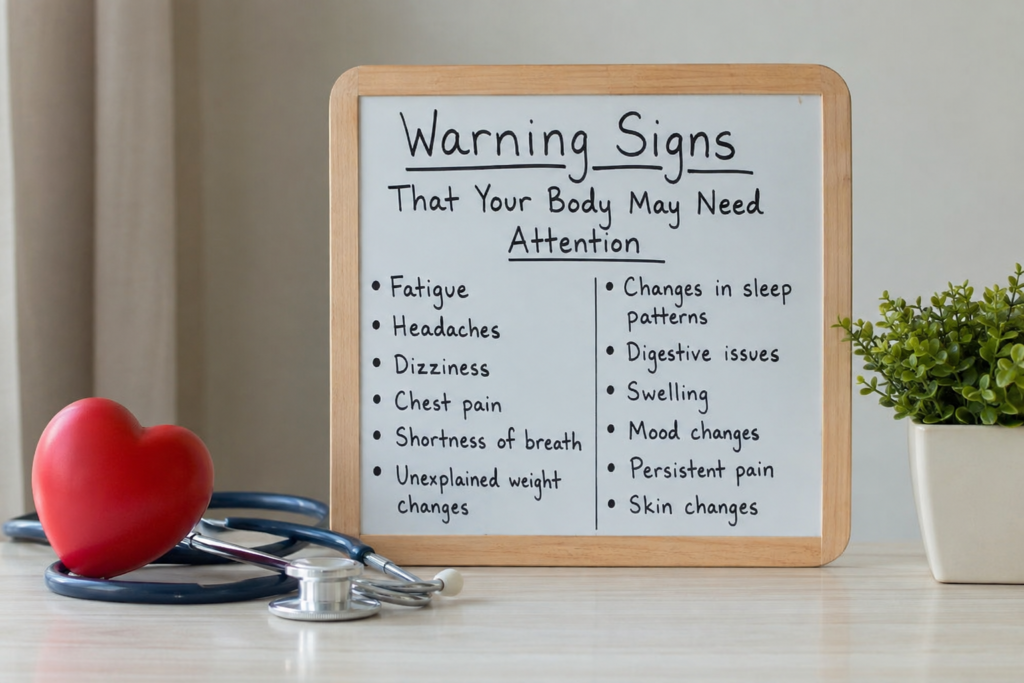
Warning signs that your body may need attention can appear in many forms, including unusual tiredness, sleep changes, unexplained weight changes, frequent headaches, digestive problems, persistent pain, mood changes, dizziness, vision changes, and unusual swelling. These signs do not automatically mean that something serious is wrong, but they are worth noticing when they are persistent, unusual, or getting worse.
The best approach to better health is to pay attention without becoming fearful. Know what is normal for you, notice meaningful changes, maintain healthy daily habits, and seek professional advice when something does not seem right. Taking your body’s signals seriously can be an important part of protecting your long term health and wellbeing.